
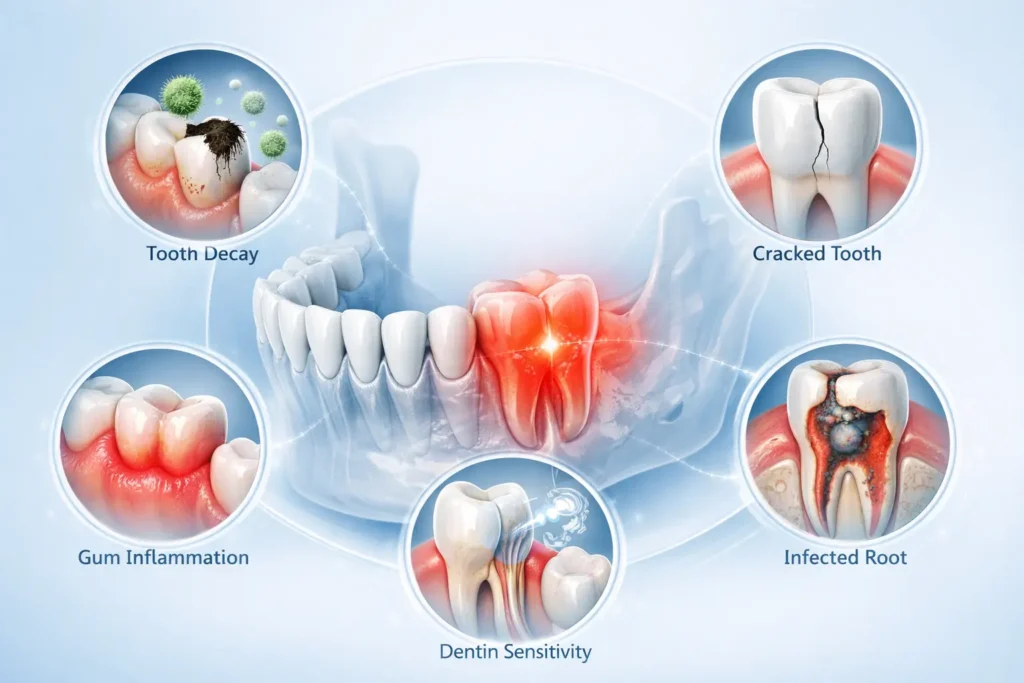
Tooth pain can range from mild sensitivity to severe throbbing discomfort that disrupts daily life. Understanding the causes of tooth pain can help you identify dental problems early and seek timely treatment.
Introduction
Understanding the causes of tooth pain can help you identify dental problems early. According to the World Health Organization, oral diseases affect nearly 3.5 billion people worldwide. Tooth pain is one of the most common dental problems affecting people of all ages. Whether it appears as a sharp sudden sensation or a dull persistent ache, dental pain can interfere with everyday activities such as eating, sleeping, and concentrating.
Many people search online asking, “Why do my teeth hurt?” The answer can vary from simple tooth sensitivity to serious dental infections. If your pain is triggered by hot or cold foods, it may be due to tooth sensitivity causes and treatment, while pain that worsens at night may indicate deeper issues—learn more about why tooth pain gets worse at night.
Studies suggest that nearly 22% of adults experience tooth pain, gum discomfort, or jaw pain within a six-month period. Because toothaches can develop suddenly and worsen quickly, understanding the causes of tooth pain and knowing when to seek professional care is essential.
Maintaining good oral hygiene and scheduling regular dental check-ups can help prevent many dental problems before they become painful.
In this guide, we explain 12 common causes of tooth pain, symptoms to watch for, temporary relief options, and when you should visit a dentist.
Table of Contents
What is Tooth Pain?
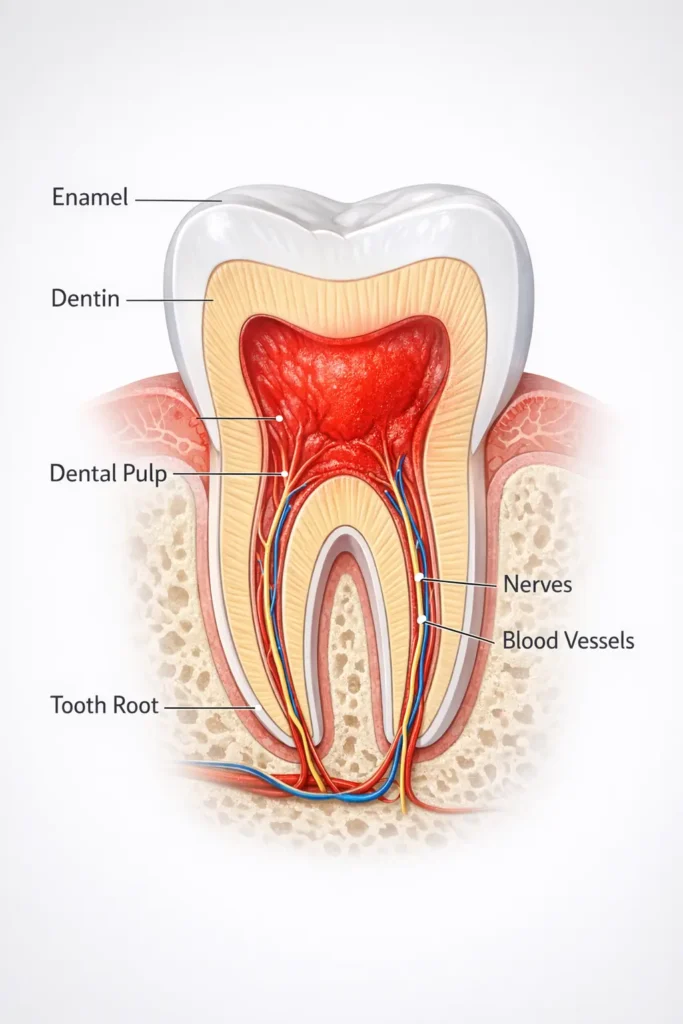
A toothache usually occurs when the dental pulp, the innermost layer of the tooth containing nerves and blood vessels, becomes inflamed.
This inflammation, known as pulpitis, is typically caused by infection, decay, trauma, or gum disease. When the pulp becomes irritated, the nerves inside the tooth send pain signals to the brain. The American Dental Association explains that inflammation of the dental pulp is often caused by deep cavities, trauma, or infection.
Pain may originate from:
• the tooth itself
• surrounding gum tissue
• nearby structures such as sinuses or jaw joints
Because the dental pulp contains nerves, even small damage to the tooth can trigger significant pain signals.Practicing good oral care habits can prevent many dental problems. Follow these daily oral hygiene tips for healthy teeth and gums.
Types of Tooth Pain and What They Mean
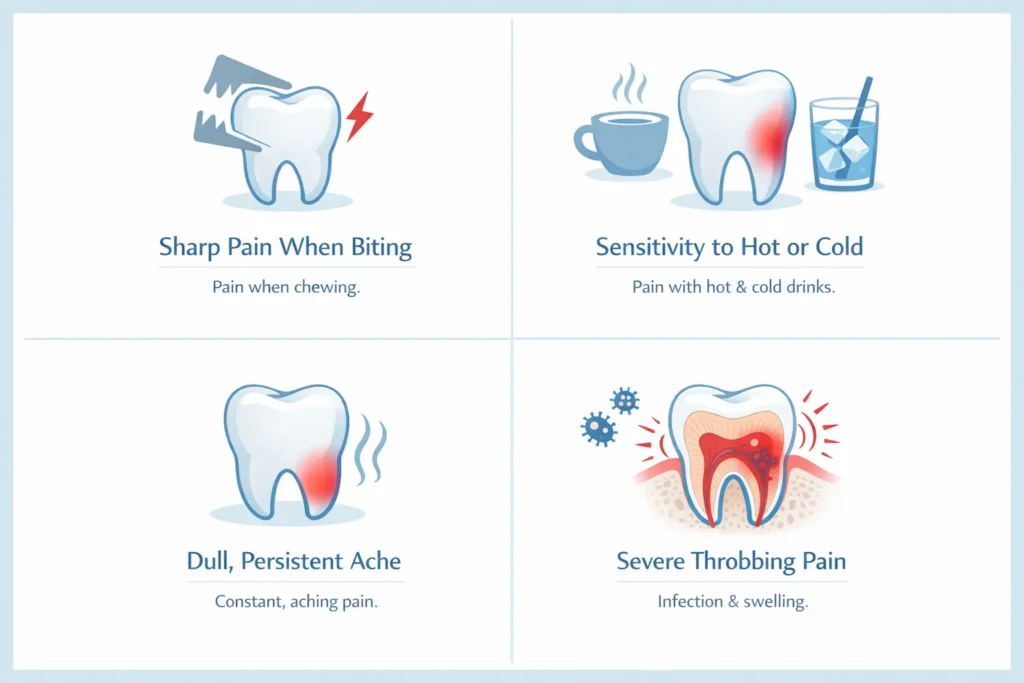
The nature of tooth pain often provides clues about the underlying problem.
Sharp Pain When Biting
Sharp pain while chewing may indicate a cavity, cracked tooth, or damaged dental filling. Learn more about tooth pain when biting down and its causes.
Sensitivity to Hot or Cold
Brief sensitivity when drinking hot tea or cold water may occur due to enamel wear, minor decay, or exposed tooth roots. Read more about tooth sensitivity causes and treatment.
Lingering Pain
Pain that continues for more than 30 seconds after exposure to temperature changes may suggest damage to the dental pulp.
Dull Persistent Ache
A constant dull ache may occur due to teeth grinding (bruxism), gum infection, or pressure from impacted teeth.
Severe Throbbing Pain
Intense throbbing pain with swelling may indicate a dental abscess, which requires urgent treatment. Learn more about tooth infection symptoms and treatment.
Pain That Comes and Goes
Pain that appears occasionally and disappears may be caused by early tooth decay, gum irritation, or mild tooth sensitivity.
Although the discomfort may seem minor, it is still advisable to have the tooth examined by a dentist. Identifying different pain patterns can also help dentists determine the underlying causes of tooth pain more accurately.
12 Common Causes of Tooth Pain
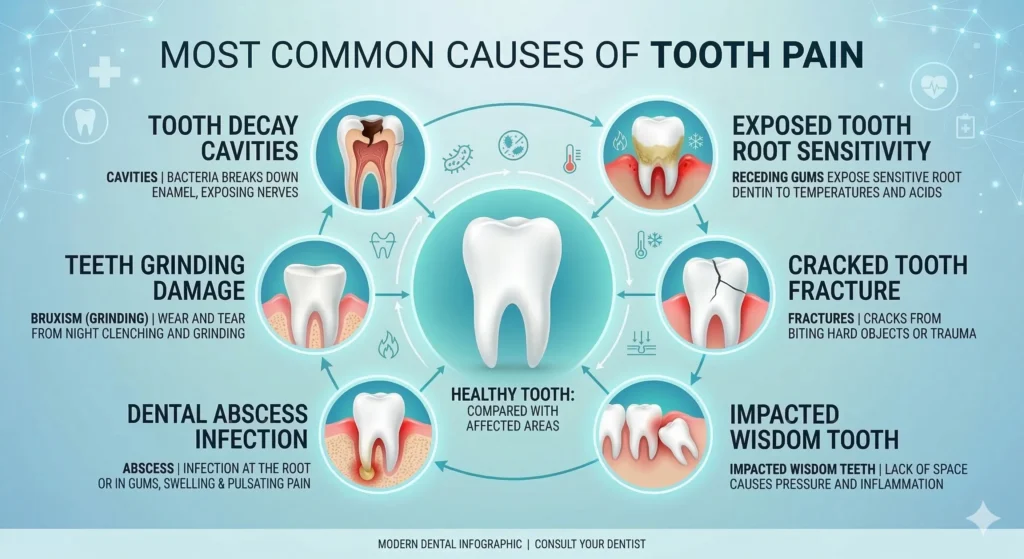
Below are the 12 most common causes of tooth pain that dentists frequently diagnose in patients.
Tooth Decay and Cavities
Tooth decay is the most common cause of tooth pain. Bacteria in the mouth feed on sugars and produce acids that gradually destroy tooth enamel. According to the Centers for Disease Control and Prevention, tooth decay is one of the most common chronic diseases affecting both children and adults.
If untreated, cavities progress deeper into the tooth and reach the sensitive pulp, causing significant pain and infection.
Maintaining good brushing and flossing habits is essential to prevent cavities. Read our ultimate guide to oral hygiene to protect your teeth.
Gum Disease (Gingivitis and Periodontitis)
Gum disease is another important cause of tooth pain, especially when inflammation reaches deeper gum tissues. Gum disease begins when bacteria accumulate along the gum line. Early stages cause redness, swelling, and bleeding gums.
Many people unknowingly develop gum disease due to improper brushing habits. If you notice swelling or bleeding gums, read more about swollen gums around a tooth and its treatment.
If left untreated, gum disease can progress to periodontitis, leading to gum recession and exposure of sensitive tooth roots. Many people unknowingly develop gum disease due to improper brushing habits. Learn about common oral hygiene mistakes that may harm your teeth.
Dental Abscess
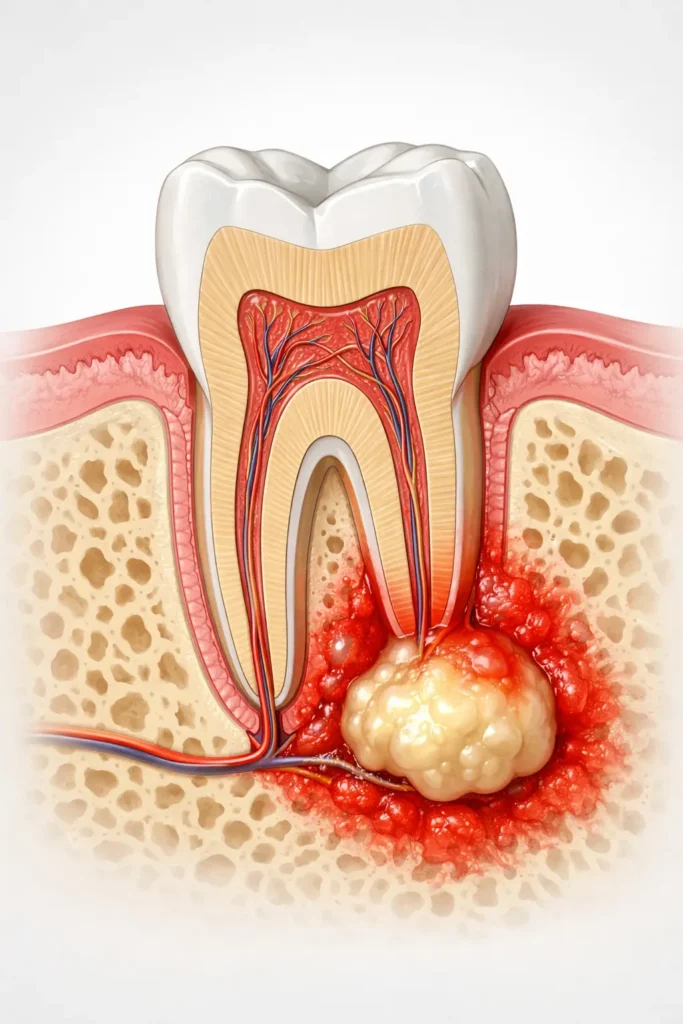
A dental abscess is one of the most serious causes of tooth pain, often producing intense throbbing discomfort and swelling. A dental abscess is a serious infection at the root of the tooth that causes swelling, severe pain, and sometimes fever. Learn more about tooth infection causes and symptoms.
Without treatment, the infection may spread to surrounding tissues.
Cracked or Damaged Teeth
A cracked tooth may occur due to injury, biting hard foods, or trauma and is one of the common causes of tooth pain, especially when chewing.
Wisdom Tooth Problems
Wisdom teeth often erupt between the ages of 18 and 25. When there is not enough space in the jaw, they may become impacted or partially erupted, leading to pain and infection —read more about wisdom tooth pain and treatment.
Teeth Grinding (Bruxism)
Many people grind their teeth during sleep due to stress. This habit can wear down enamel and cause chronic tooth sensitivity, jaw pain, and headaches.
Tooth Sensitivity
Tooth sensitivity occurs when the protective enamel layer becomes worn or gums recede, exposing the dentin layer beneath.This allows hot, cold, sweet, or acidic foods to stimulate nerves inside the tooth. This is one of the frequently overlooked causes of tooth pain, especially when consuming hot or cold foods—read our guide on tooth sensitivity causes and treatment.
Loose or Damaged Dental Fillings
Old fillings may crack, loosen, or fall out over time, exposing sensitive parts of the tooth. If your pain started after treatment, read about tooth pain after dental filling.
Food Stuck Between Teeth
Sometimes tooth pain occurs when food particles become trapped between teeth, irritating the gums. Proper flossing can often relieve this discomfort.
Gum Recession
When gums recede, the tooth roots become exposed. These roots do not have protective enamel, making them highly sensitive to temperature changes.
Orthodontic Pressure
Braces or dental aligners may cause temporary tooth pain as teeth shift into their correct positions.
Recent Dental Procedures
After procedures such as fillings, crowns, or teeth whitening, temporary tooth sensitivity may occur for a short period.
Surprising Causes of Tooth Pain
Sometimes the causes of tooth pain are not related directly to the teeth but to surrounding structures such as the sinuses or jaw joints.
Sinus Infection
Inflamed sinuses can put pressure on the roots of upper teeth, causing pain that feels like a toothache.Medical experts at the Mayo Clinic note that sinus infections can sometimes cause pain that feels similar to a toothache.
TMJ Disorders
Problems with the jaw joint may cause pain that spreads to the teeth and ears.
Heart Conditions
In rare cases, pain from a heart attack may radiate to the jaw or teeth.
Ear Infections
Sometimes ear infections can create pain that radiates toward the teeth and jaw.
Home Remedies for Temporary Tooth Pain Relief

Home remedies can provide temporary relief until you see a dentist, but they do not treat the underlying causes of tooth pain. For complete guidance, read home remedies for tooth pain.
Saltwater Rinse
Mix half a teaspoon of salt in warm water and rinse your mouth to reduce inflammation and kill bacteria.
Cold Compress
Applying a cold pack to the cheek for 10–15 minutes can reduce swelling and numb the area.
Clove Oil
Clove oil contains eugenol, a natural antiseptic that helps reduce tooth pain.
Over-the-Counter Pain Relief
Medications such as ibuprofen or paracetamol can help control inflammation and discomfort. The National Health Service (NHS) recommends over-the-counter pain relief and saltwater rinses for temporary relief until dental care is available.
Important: Never place aspirin directly on gums as it can cause tissue damage.
Hydrogen Peroxide
Rinse A diluted hydrogen peroxide rinse may help reduce bacteria and inflammation.
Peppermint Tea Bags
A cooled peppermint tea bag applied to the affected area may provide mild numbing and soothing effects.
Maintaining proper oral hygiene products can also help prevent bacterial growth. Learn how to choose the best toothpaste and mouthwash for bad breath.
When Tooth Pain Is a Dental Emergency
Seek immediate dental care if you experience:
• severe swelling of the face or gums
• difficulty breathing or swallowing
• fever with tooth pain
• a knocked-out tooth due to injury
• pain lasting longer than two days.
These symptoms may indicate serious infection requiring urgent treatment.
Severe tooth pain accompanied by facial swelling may indicate a spreading infection that requires urgent dental treatment.
Dental Treatments for Tooth Pain
A dentist will determine the cause of tooth pain and recommend appropriate treatment.
Antibiotic Treatment
If a bacterial infection is present, dentists may prescribe antibiotics to control the infection before further dental procedures.
Dental Fillings
Used to repair small cavities or minor tooth damage.
Dental Crowns
Crowns restore and strengthen teeth with large cracks or decay.
Root Canal Treatment
Root Canal Treatment removes infected pulp and saves the natural tooth. Learn more about signs you need a root canal.
Tooth Extraction
If the tooth cannot be saved, extraction may be necessary.
How to Prevent Tooth Pain
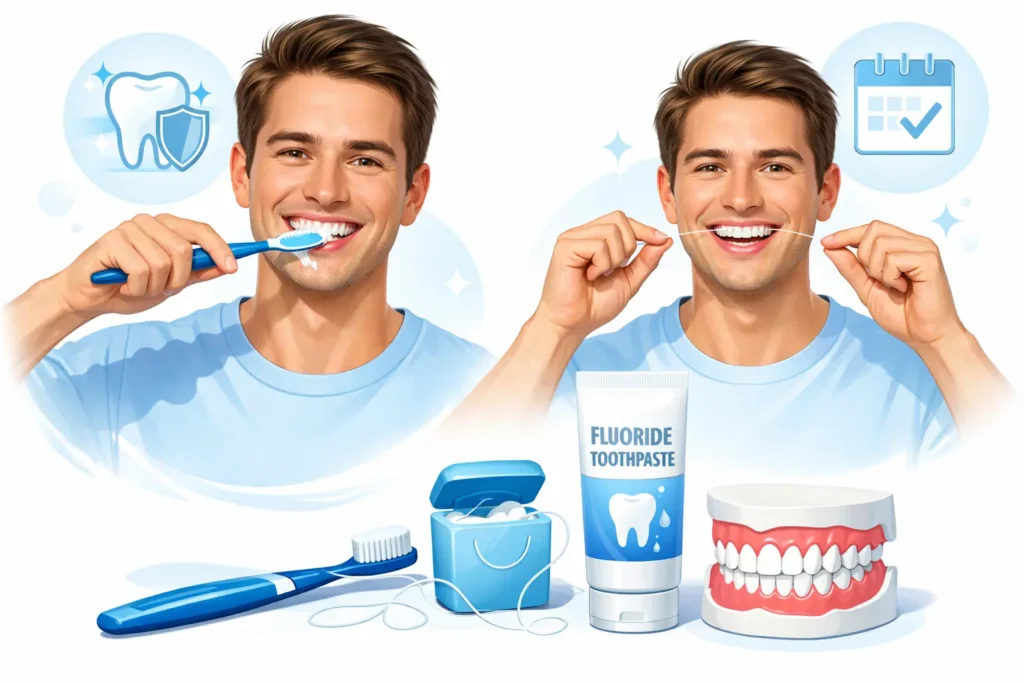
Understanding the causes of tooth pain can help you take preventive steps to protect your dental health.Prevention is the best way to avoid dental emergencies.
Maintain Good Oral Hygiene
Brush twice daily using fluoride toothpaste and floss regularly.
Replace Your Toothbrush Regularly
Changing your toothbrush every three to four months helps maintain effective plaque removal.
Reduce Sugar Intake
Limiting sugary foods helps prevent tooth decay.
Visit Your Dentist Regularly
Routine dental check-ups help detect problems early.
Use a Mouthguard
If you grind your teeth or play sports, a mouthguard can protect your teeth.
A balanced diet plays an important role in protecting your teeth. Discover essential foods for optimal oral health that support strong teeth and gums.
Tooth Pain Treatment in Ranchi

If you experience persistent tooth pain, it is important to consult a dental professional for proper diagnosis and treatment.
At Dr. Kaur’s True Pearls Dental Care in Ranchi, patients receive comprehensive dental care including:
• cavity treatment
• root canal therapy
• wisdom tooth evaluation
• gum disease treatment
• preventive dental services
Early treatment can prevent complications and help preserve your natural teeth.
Quick Tips for Managing Tooth Pain
If you experience tooth pain:
• rinse your mouth with warm salt water
• apply a cold compress to reduce swelling
• avoid very hot or cold foods
• take over-the-counter pain medication if necessary
• schedule a dental appointment if pain lasts more than 48 hours
Frequently Asked Questions About Tooth Pain
Why does my tooth hurt when I bite down?
Pain when biting may occur due to a cracked tooth, cavity, or damaged filling.
What are the most common causes of tooth pain?
The most common causes of tooth pain include cavities, gum disease, cracked teeth, dental abscesses, tooth sensitivity, and wisdom tooth problems.
How long should a toothache last?
Tooth pain that lasts longer than 48 hours should be evaluated by a dentist.
Can tooth pain go away on its own?
Temporary pain may subside, but underlying problems such as cavities or infections usually require treatment.
What is the fastest way to relieve tooth pain?
Saltwater rinses, cold compresses, and over-the-counter pain relief can temporarily reduce discomfort.
Can stress cause tooth pain?
Yes. Stress may lead to teeth grinding (bruxism), which can cause tooth pain, jaw discomfort, and enamel wear.
Is tooth pain always caused by cavities?
No. Tooth pain can also be caused by gum disease, cracked teeth, sinus infections, or jaw joint disorders.
Conclusion
By understanding the causes of tooth pain and seeking treatment early, you can prevent serious dental complications and maintain a healthy smile. Tooth pain is often the body’s warning signal that something is wrong with your oral health. While home remedies may provide temporary relief, they do not address the underlying cause of the problem. Recognising the causes of tooth pain and seeking treatment early can prevent serious dental complications.
Maintaining good oral hygiene, limiting sugary foods, and visiting your dentist regularly can help prevent many dental problems before they become painful.
If you experience persistent or severe tooth pain, seeking professional dental care promptly can protect your teeth, relieve discomfort, and restore your oral health.