
By Dr. Gurinder Kaur, MDS – 20+ Years of Clinical Experience
Sometimes a mild toothache appears suddenly, and it’s easy to ignore it due to a busy schedule. However, dental infections rarely resolve on their own. What begins as a minor discomfort can quickly progress into severe pain, swelling, and serious complications.
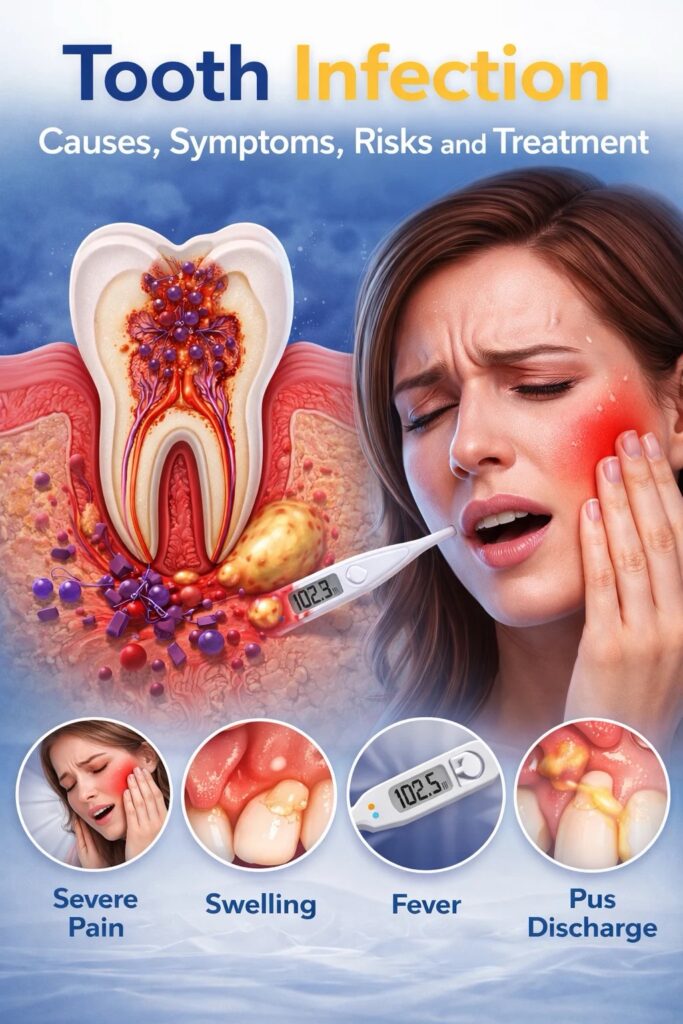
A tooth infection, also known as a dental abscess, is not just a localized dental issue—it is a condition that can affect your overall health if left untreated. Understanding tooth infection symptoms early can help you seek timely treatment and prevent complications.
What is a Tooth Infection?
A tooth infection occurs when bacteria enter the inner layers of the tooth or surrounding gums, leading to the formation of pus and inflammation.
There are three main types of dental infections:
- Periapical Abscess – infection at the root tip
- Periodontal Abscess – infection in gum and bone structures
- Gingival Abscess – infection limited to gum tissue
These infections develop when bacteria bypass the natural protective layers of the tooth.
How Does a Tooth Infection Start?
Understanding the causes helps prevent infection.
Common causes include:
- untreated cavities
- cracked or broken teeth
- gum disease (periodontitis)
- failed dental fillings or crowns
Lifestyle risk factors include:
- high sugar intake
- smoking
- dry mouth
- poor oral hygiene
- weakened immunity
Many of these are also common causes of tooth pain, which often progress into infection if untreated.
7 Tooth Infection Symptoms You Should Never Ignore
Recognizing early signs can help save your tooth.
1. Persistent, Throbbing Tooth Pain
One of the most common tooth infection symptoms is continuous, throbbing pain that may radiate to the jaw, ear, or face.
👉 This pain often worsens at night. Learn why in our guide on tooth pain at night and its causes.
2. Swelling in Face, Jaw, or Gums
Swelling indicates that infection is spreading beyond the tooth. It may appear as puffy gums or facial swelling.
3. Lingering Sensitivity to Hot and Cold
Pain that continues after exposure to temperature changes may indicate nerve damage.
👉 This may initially feel like sensitivity. Read more about tooth sensitivity causes and treatment.
4. Bad Breath or Foul Taste
Persistent bad breath or a bitter taste may be due to pus draining from an abscess.
5. Pus or Gum Boil
A small pimple-like bump on the gums is a clear sign of infection and should never be ignored.
6. Pain When Biting or Chewing
Sharp pain during chewing indicates inflammation around the tooth root.
7. Tooth Discoloration
A darkened tooth may indicate dead pulp tissue due to infection.
These symptoms often indicate serious infected tooth symptoms that require immediate dental care.
What Happens If a Tooth Infection Is Ignored?
Ignoring infection can lead to:
- spread of infection to jaw and face
- dental abscess formation
- bone loss
- tooth loss
- systemic infection (rare but serious)
In severe cases, infection can spread to other parts of the body.
When Is It a Dental Emergency?
Seek immediate care if you experience:
- high fever
- facial swelling
- difficulty swallowing or breathing
- pus discharge
- severe, worsening pain
These are signs of advanced infection requiring urgent treatment.
Diagnosis and Treatment
A dentist will diagnose the infection using:
- clinical examination
- X-rays
- percussion tests
Treatment options include:
Root Canal Treatment
Removes infected pulp and saves the tooth.
👉 Learn more in our guide on signs you need a root canal treatment.
Incision and Drainage
Used to release pus and reduce pressure.
Tooth Extraction
Required if the tooth cannot be saved.
Antibiotics
Help control infection but do not replace dental treatment.
Temporary Relief at Home
While waiting for treatment, you can manage symptoms:
- rinse with warm saltwater
- apply cold compress
- take pain relief medication
- avoid chewing on affected side
👉 Explore more home remedies for tooth pain relief for temporary comfort.
Prevention Tips
Preventing infection is easier than treating it.
- brush twice daily with fluoride toothpaste
- floss regularly
- limit sugary foods
- stay hydrated
- visit dentist regularly
👉 Follow these daily oral hygiene tips for healthy teeth and gums.
Frequently Asked Questions
What are the first signs of tooth infection?
Pain, swelling, sensitivity, and bad taste are early signs.
Can a tooth infection go away on its own?
No. It requires professional dental treatment.
Is a tooth infection serious?
Yes. It can spread and cause complications if untreated.
What are the main causes of tooth pain?
Cavities, infections, gum disease, and cracked teeth are common causes.
Conclusion
A tooth infection is a serious dental condition that should never be ignored. Early identification of tooth infection symptoms can help prevent complications and save your natural tooth.
While temporary remedies may provide relief, they do not treat the underlying problem. Seeking professional dental care at the right time is essential for long-term oral health.
About the Author
Dr. Gurinder Kaur is an experienced dental surgeon with over 20 years of clinical expertise in diagnosing and treating tooth infections, root canal cases, and complex dental conditions.
She leads Dr. Kaur’s True Pearls Dental Care with a focus on advanced treatment, patient comfort, and preventive care.