
By Dr. Gurinder Kaur, MDS (20+ Years Experience)
Healthy gums are the foundation of a strong and beautiful smile. Normally, gums are firm, pale pink, and fit tightly around your teeth. However, if you notice swollen gums around a tooth, redness, or tenderness, it is a sign that something is not right.
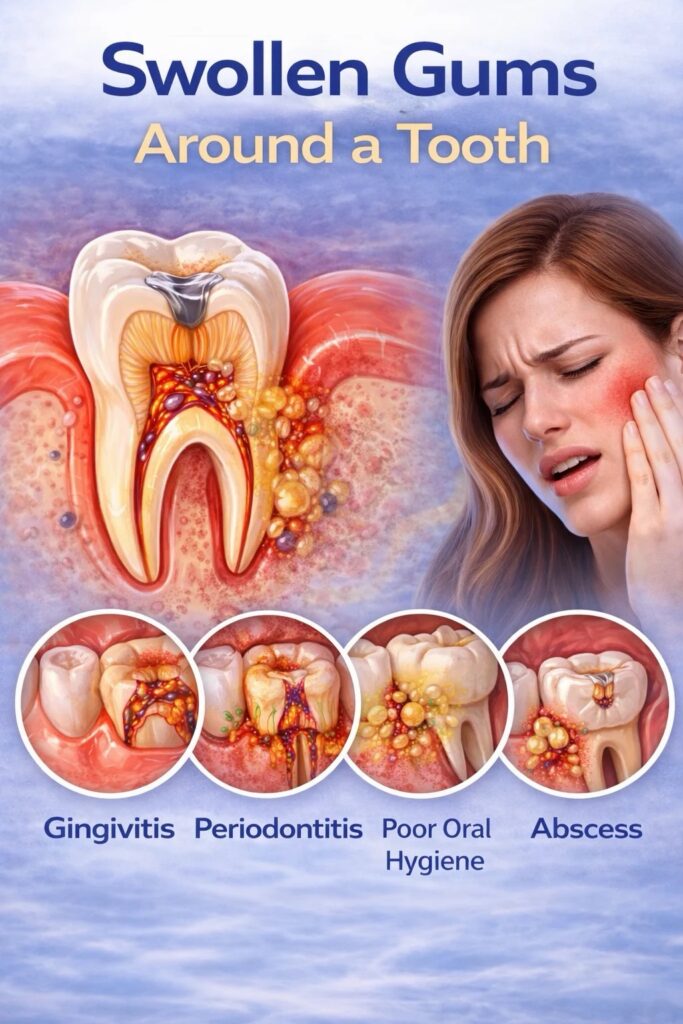
Swollen gums—medically called gingival swelling—can range from mild irritation to a serious infection. In many cases, it is one of the early warning signs of tooth pain and dental infection, and should never be ignored.
In this complete guide, you will learn the causes of swollen gums, symptoms to watch for, effective treatments, and when you should see a dentist.
What Causes Swollen Gums Around a Tooth?
1. Poor Oral Hygiene and Gingivitis (Most Common Cause)
The most common reason for swollen gums is plaque buildup due to poor oral hygiene.
When you eat sugary or starchy foods, bacteria form a sticky layer called plaque. If not removed, it hardens into tartar and irritates the gums, causing:
- Redness
- Swelling
- Bleeding while brushing
This early stage is called gingivitis, and it is reversible.
👉 Also read: 10 Daily Oral Hygiene Tips for Healthy Teeth and Gums
2. Periodontitis (Advanced Gum Disease)
If gingivitis is ignored, it progresses into periodontitis—a serious gum infection.
This leads to:
- Gum recession
- Bone loss
- Loose teeth
- Persistent swelling
It is also linked to systemic conditions like diabetes and heart disease.
3. Swelling Around One Tooth (Localized Infection)
If swelling is present around a single tooth, it may indicate:
- Food stuck between teeth
- Gum infection
- Early abscess
👉 Read: Tooth Infection – Causes, Symptoms & Treatment
4. Dental Abscess (Serious Cause)
A dental abscess is a pus-filled infection around the tooth root or gums.
Symptoms include:
- Severe throbbing pain
- Swelling in face or jaw
- Fever
- Bad taste or pus discharge
⚠️ This is a dental emergency.
5. Swollen Gums Behind Back Teeth (Pericoronitis)
If swelling occurs near wisdom teeth, it is often pericoronitis.
This happens when:
- Wisdom teeth partially erupt
- Food and bacteria get trapped
Symptoms:
- Pain while chewing
- Difficulty opening mouth
- Bad breath
👉 Related: Wisdom Tooth Pain Guide
6. Hormonal Changes
Hormonal fluctuations during:
- Pregnancy
- Puberty
- Menopause
Can increase gum sensitivity and swelling.
7. Vitamin Deficiency
Deficiency of Vitamin C or B can lead to:
- Weak gums
- Bleeding
- Swelling
8. Medical Conditions and Medications
Conditions like:
- Diabetes
- Immunity disorders
And certain medications can increase gum inflammation.
Symptoms of Swollen Gums You Should Not Ignore
You may have a gum problem if you notice:
- Red, swollen, or puffy gums
- Bleeding while brushing
- Pain when chewing
- Bad breath or bad taste
- Gum recession
- Loose teeth
👉 Also read: Why Do My Teeth Hurt? Causes of Tooth Pain
Home Remedies for Swollen Gums (Temporary Relief)
These can help reduce discomfort but do not replace dental treatment.
1. Warm Salt Water Rinse
Reduces bacteria and soothes inflammation
2. Cold Compress
Reduces swelling and numbs pain
3. Clove Oil
Natural pain relief with antibacterial properties
4. Turmeric Gel
Anti-inflammatory and healing support
5. Pain Relievers
Ibuprofen helps reduce inflammation
👉 Also read: Home Remedies for Tooth Pain
Professional Treatments for Swollen Gums
Depending on the cause, your dentist may recommend:
1. Professional Cleaning
Removes plaque and tartar
2. Scaling and Root Planing
Deep cleaning for gum disease
3. Antibiotics
For infections and abscess
4. Root Canal Treatment
If infection reaches tooth pulp
👉 Read: Signs You Need a Root Canal
5. Wisdom Tooth Removal
If pericoronitis is recurring
When Should You See a Dentist?
Consult a dentist immediately if you have:
- Swelling lasting more than 5–7 days
- Severe pain
- Pus discharge
- Fever or facial swelling
- Difficulty opening mouth
⚠️ These may indicate serious infection.
Prevention Tips for Healthy Gums
- Brush twice daily
- Floss regularly
- Avoid sugary foods
- Stay hydrated
- Quit smoking
- Visit dentist every 6 months
👉 Also read: Importance of Regular Dental Check-ups
Frequently Asked Questions
Why are my gums swollen around one tooth?
It is usually due to infection, food impaction, or early abscess.
Can swollen gums go away on their own?
Mild gingivitis can improve, but infections require treatment.
Are swollen gums serious?
They can be—especially if linked to infection or gum disease.
Conclusion
Swollen gums are not just a minor inconvenience—they are your body’s warning signal. Whether caused by poor hygiene, infection, or wisdom teeth, early treatment can prevent serious complications.
If you notice persistent swelling, pain, or bleeding, do not ignore it. Timely dental care can protect both your teeth and overall health