
By Dr. Gurinder Kaur, MDS – 20+ Years of Clinical Experience
Wisdom teeth are the last set of molars that usually appear between the ages of 17 and 25. While some people experience no issues, many develop wisdom tooth pain due to lack of space in the jaw.
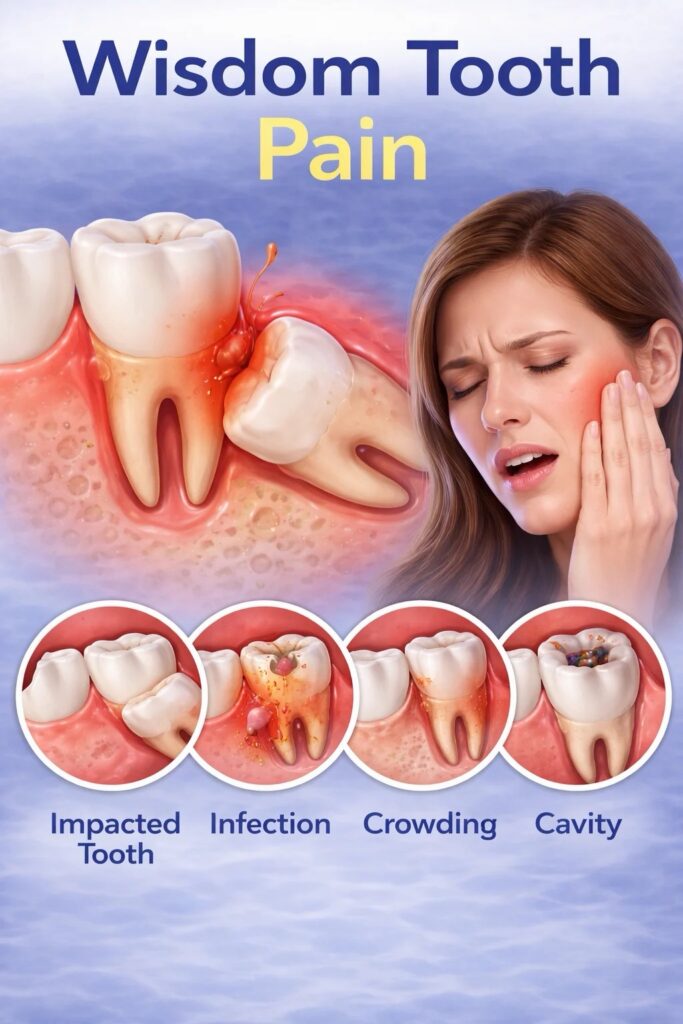
This pain can range from mild discomfort to severe throbbing pain at the back of the mouth, affecting eating, speaking, and sleep.
Understanding the causes of wisdom tooth pain can help you take timely action and prevent serious dental complications.
What Causes Wisdom Tooth Pain?
The most common reason behind wisdom tooth pain is impaction, where the tooth does not have enough space to erupt properly.
Types of impaction include:
- soft tissue impaction – tooth partially covered by gums
- hard tissue impaction – tooth trapped under bone
Based on direction, impacted teeth may be:
- mesial (tilted forward)
- distal (tilted backward)
- vertical (upright but stuck)
- horizontal (lying sideways)
Impacted wisdom teeth can press against nearby teeth, causing pain and damage.
Another major cause is pericoronitis, an infection of the gum around partially erupted teeth due to trapped food and bacteria.
👉 This may progress into infection. Learn more about tooth infection symptoms you should never ignore.
Symptoms of Wisdom Tooth Pain
Recognizing symptoms early can prevent complications.
1. Pain at the Back of the Mouth
A dull or throbbing pain near the last molars is the most common symptom.
2. Swelling in Jaw or Cheek
Swelling indicates inflammation or infection around the tooth.
3. Red or Bleeding Gums
Inflamed gums around the wisdom tooth may bleed or feel tender.
4. Difficulty Opening Mouth
Jaw stiffness (trismus) can make chewing or speaking difficult.
5. Bad Breath or Unpleasant Taste
Trapped bacteria can cause persistent bad breath.
👉 Learn more about causes of bad breath and how to manage it.
6. Headache or Ear Pain
Pain may radiate to nearby areas due to nerve involvement.
7. Crowding of Teeth
Wisdom teeth may push other teeth, causing misalignment.
8. Fever and Swelling
These are signs of infection and require immediate attention.
Why Wisdom Tooth Pain Is Worse at Night
Many patients experience increased pain at night due to:
- increased blood flow to the head
- fewer distractions
- reduced saliva production
- teeth grinding during sleep
👉 Read more about tooth pain at night and its causes.
Wisdom Tooth Pain vs Cavity Pain
It is important to differentiate between the two:
- Wisdom tooth pain – dull, throbbing, located at back
- Cavity pain – sharp, triggered by food or temperature
👉 Explore more about tooth sensitivity causes and treatment.
Home Remedies for Wisdom Tooth Pain Relief
These remedies provide temporary relief:
Cold Compress
Apply ice pack to reduce swelling and numb pain.
Saltwater Rinse
Helps reduce bacteria and inflammation.
Clove Oil
Acts as a natural pain reliever.
Pain Relief Medication
Ibuprofen or paracetamol can help manage discomfort.
Elevate Your Head While Sleeping
Helps reduce pressure and throbbing pain.
👉 For more options, read home remedies for tooth pain relief.
When Is Wisdom Tooth Removal Needed?
Not all wisdom teeth need removal, but extraction is recommended when:
- pain is persistent
- infection develops
- tooth is impacted
- swelling or abscess occurs
- nearby teeth are affected
Wisdom Tooth Extraction: What to Expect
Wisdom tooth removal is a routine procedure.
Steps include:
- local anesthesia or sedation
- removal of tooth (sometimes in sections)
- cleaning of area
- stitches if required
The procedure is painless due to anesthesia.
Recovery After Wisdom Tooth Removal
Recovery typically takes 1–2 weeks.
Important care tips:
- eat soft foods
- avoid hot and spicy foods
- avoid smoking or using straws
- maintain gentle oral hygiene
When Should You See a Dentist?
Consult your dentist if:
- pain persists or worsens
- swelling increases
- fever develops
- difficulty opening mouth
- bad taste or pus discharge
These may indicate serious infection.
Frequently Asked Questions
How long does wisdom tooth pain last?
It can last a few days to weeks depending on severity.
Can wisdom tooth pain go away on its own?
Temporary pain may reduce, but underlying issues often require treatment.
Is wisdom tooth removal painful?
No. Modern procedures are comfortable and pain-free.
What are the causes of tooth pain related to wisdom teeth?
Impaction, infection, and pressure on nearby teeth are common causes.
Conclusion
Wisdom tooth pain is common but should not be ignored. It is often linked to impaction or infection and can worsen over time.
Understanding the causes of tooth pain related to wisdom teeth helps you take timely action and avoid complications.
If symptoms persist, professional dental care is the best way to ensure long-term oral health.
About the Author
Dr. Gurinder Kaur is an experienced dental surgeon with over 20 years of clinical expertise in oral surgery, tooth pain management, and preventive dentistry.
She leads Dr. Kaur’s True Pearls Dental Care with a focus on advanced dental treatments, patient comfort, and long-term oral health.