
By Dr. Gurinder Kaur, MDS – 20+ Years of Clinical Experience
Tooth pain is one of the most uncomfortable and disruptive health problems a person can experience. What may begin as mild sensitivity can gradually develop into severe, persistent pain that affects eating, sleeping, and daily activities.
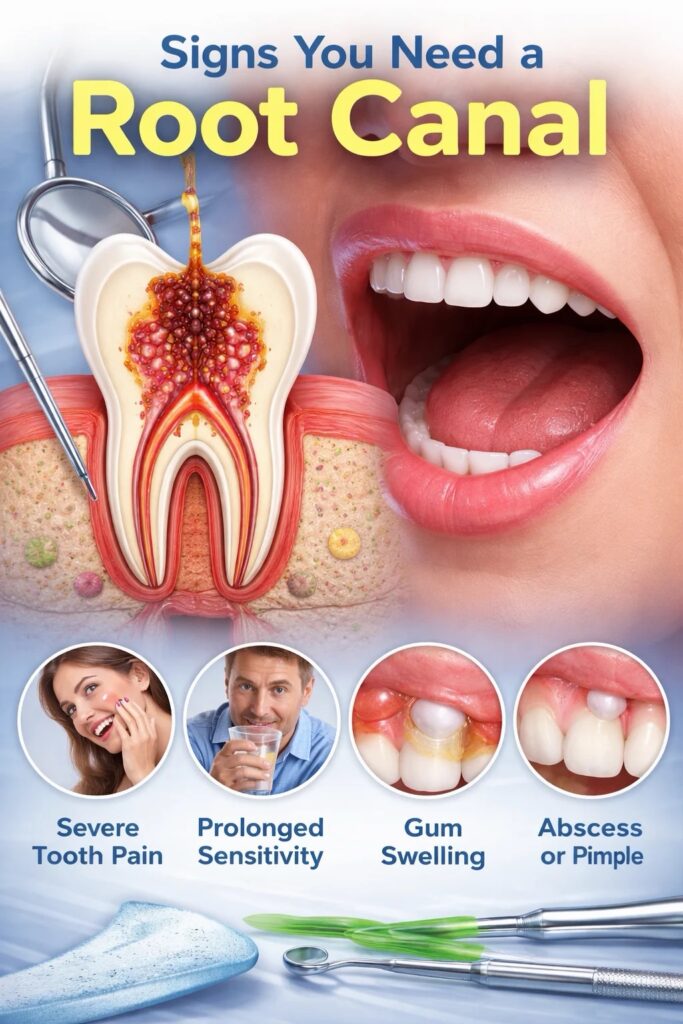
Many people delay treatment due to fear, hoping the pain will go away on its own. However, persistent pain is often one of the serious causes of tooth pain and may indicate an infection inside the tooth that requires root canal treatment.
Modern root canal treatments are safe, effective, and designed to relieve pain—not cause it. Early diagnosis can help save your natural tooth and prevent complications.
What is a Root Canal Treatment?
A root canal is a dental procedure used to treat infection inside the tooth.
Each tooth has three layers:
- Enamel – the hard outer layer
- Dentin – the middle layer
- Pulp – the inner soft tissue containing nerves and blood vessels
When bacteria enter the pulp due to decay, cracks, or trauma, it causes infection and inflammation. This leads to pain and requires removal of the infected pulp through root canal treatment.
7 Warning Signs You May Need a Root Canal
Only a dentist can confirm the need for a root canal, but these symptoms are strong indicators.
1. Persistent, Throbbing Tooth Pain
Continuous pain that does not go away is one of the most common signs. The pain may spread to the jaw, ear, or surrounding teeth.
2. Lingering Sensitivity to Hot and Cold
If pain continues even after removing hot or cold food, it may indicate nerve damage inside the tooth.
3. Swollen or Tender Gums
Swelling around a specific tooth may indicate infection. In some cases, a small pus-filled bump (abscess) may appear.
4. Tooth Discoloration
A tooth turning dark yellow, grey, or black may indicate internal damage or dead pulp tissue.
5. Pain When Chewing or Biting
Sharp pain while chewing often indicates inflammation around the root of the tooth.
6. Cracked or Damaged Tooth
Cracks allow bacteria to enter the pulp, leading to infection and pain.
7. Loose Tooth or Pressure Sensation
Infection can weaken supporting bone, making the tooth feel loose or uncomfortable.
These symptoms often indicate serious causes of tooth pain that require immediate dental attention.
What Happens If You Ignore These Symptoms?
Ignoring these signs can lead to:
- severe infection spreading to surrounding tissues
- dental abscess formation
- bone loss around the tooth
- tooth loss
- increased pain and complications
Tooth pain rarely resolves on its own. Delaying treatment can make the condition worse.
Root Canal vs Tooth Extraction
Many patients think removing the tooth is easier, but saving your natural tooth is always preferred.
Root canal treatment helps:
- preserve natural chewing function
- maintain jawbone health
- prevent shifting of nearby teeth
Extraction may require replacement with implants or bridges, making root canal a more conservative option.
What to Expect During Root Canal Treatment
Modern root canal treatment is comfortable and efficient.
The procedure includes:
- Numbing the tooth with local anesthesia
- Removing infected pulp tissue
- Cleaning and disinfecting the canals
- Filling and sealing the tooth
- Placing a crown for protection
Most patients experience relief from pain after the procedure.
Recovery and Aftercare
Recovery is usually quick.
- mild discomfort may last a few days
- avoid chewing hard foods temporarily
- maintain good oral hygiene
- take prescribed medications if needed
Most patients return to normal activities within a day.
How to Prevent the Need for Root Canal
Preventive care can reduce the risk of severe dental problems.
- brush twice daily with fluoride toothpaste
- floss regularly
- avoid excessive sugary foods
- use a mouthguard if you grind your teeth
- visit your dentist regularly
👉 Follow these daily oral hygiene tips for healthy teeth and gums to maintain oral health.
When Should You See a Dentist?
Consult a dentist immediately if:
- pain persists for more than 1–2 days
- swelling or pus is present
- tooth becomes discolored
- pain worsens at night
👉 Night pain can be an early warning sign. Learn more about why tooth pain increases at night and how to manage it.
Frequently Asked Questions
Is root canal treatment painful?
No. Modern techniques make the procedure comfortable and similar to a filling.
How long does a root canal take?
Usually 60–90 minutes depending on the case.
Can I avoid a root canal?
Early treatment of cavities can prevent it, but once infection reaches the pulp, root canal is necessary.
What are the main causes of tooth pain?
Common causes of tooth pain include cavities, infections, cracked teeth, gum disease, and sensitivity.
Conclusion
A root canal is a highly effective procedure that helps save your natural tooth and eliminate pain caused by infection.
Ignoring symptoms like persistent pain, swelling, or sensitivity can lead to serious complications. Understanding these warning signs and the underlying causes of tooth pain can help you take timely action.
If you experience any of these symptoms, seeking professional dental care early is the best way to protect your oral health.
About the Author
Dr. Gurinder Kaur is an experienced dental surgeon with over 20 years of clinical expertise in diagnosing and treating tooth pain, infections, and restorative dental conditions.
She leads Dr. Kaur’s True Pearls Dental Care, focusing on advanced dental treatments, patient comfort, and long-term oral health.