
By Dr. Gurinder Kaur, MDS – 20+ Years of Clinical Experience
Have you ever noticed that your tooth feels fine during the day but suddenly starts throbbing the moment you lie down to sleep? You’re not alone. Many people experience worsening tooth pain at night, making it difficult to rest and affecting overall well-being.
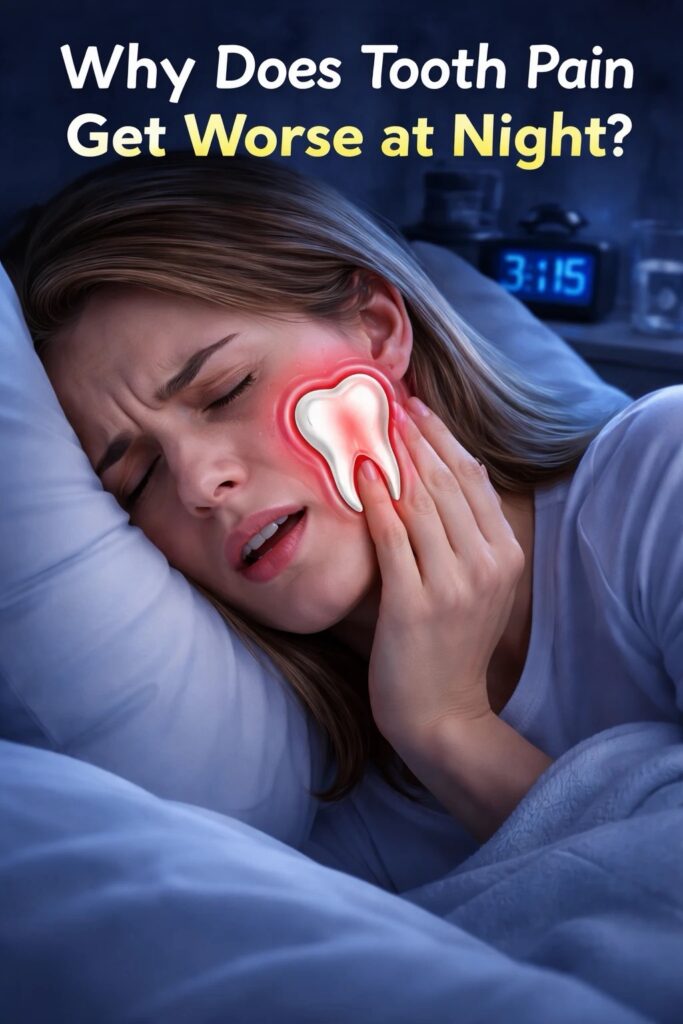
Tooth pain at night is not random—it usually indicates an underlying dental issue. Understanding the causes of tooth pain and why it intensifies at night can help you manage discomfort and seek timely treatment.
Why Does Tooth Pain Increase at Night?
Several biological and physical factors explain why tooth pain becomes worse at night.
1. Increased Blood Flow to the Head
When you lie down, blood flow to your head increases. This creates extra pressure in the blood vessels around your teeth, especially in areas with inflammation or infection.
This pressure can intensify pain signals, making even mild discomfort feel severe.
2. Fewer Distractions
During the day, your brain is occupied with work, conversations, and activities. At night, when everything is quiet, your mind becomes more aware of pain.
Even minor dental discomfort can feel more intense because there are no distractions.
3. Reduced Saliva Production
Saliva helps wash away bacteria and neutralize acids in your mouth. At night, saliva production decreases, creating a dry environment where bacteria can thrive.
This can worsen irritation and increase tooth pain, especially if you have cavities or gum infection.
4. Increased Sensitivity to Pain
At night, your body produces less cortisol, a hormone that helps reduce inflammation. Lower cortisol levels make your nerves more sensitive, increasing the perception of pain.
5. Late-Night Eating Habits
Eating sugary or acidic foods before sleeping without brushing your teeth can trigger pain. Bacteria feed on leftover food particles, producing acids that irritate the tooth.
Common Causes of Tooth Pain at Night
Nighttime pain is usually linked to underlying dental conditions. These include:
Tooth Decay and Cavities
One of the most common causes of tooth pain is tooth decay. When cavities reach the inner layers of the tooth, they expose nerves and cause pain.
Teeth Grinding (Bruxism)
Grinding your teeth at night puts pressure on your teeth and jaw, leading to soreness and sensitivity.
Gum Disease
Inflamed or infected gums can cause dull, persistent pain that becomes worse at night.
Cracked or Damaged Teeth
Even small cracks can expose sensitive inner layers of the tooth, causing sharp pain.
Dental Abscess
A dental abscess is a serious infection that causes severe throbbing pain, swelling, and sometimes fever.
Sinus Infection
Sinus pressure can affect upper teeth, especially when lying down, creating a sensation similar to toothache.
Many of these conditions are common causes of tooth pain and require proper dental evaluation.
How to Relieve Tooth Pain at Night
While these remedies do not treat the root cause, they can provide temporary relief.
Elevate Your Head
Sleeping with your head elevated reduces blood pressure in the affected area and helps decrease pain.
Apply a Cold Compress
Apply an ice pack to the cheek for 15–20 minutes to reduce swelling and numb pain.
Use Pain Relief Medication
Over-the-counter medications like ibuprofen or paracetamol can help reduce inflammation and discomfort.
Rinse with Warm Saltwater
Saltwater helps reduce bacteria and soothe inflamed tissues.
👉 You can also explore more home remedies for tooth pain relief for temporary comfort.
Apply Clove Oil
Clove oil contains natural pain-relieving properties and can help numb the affected area.
Avoid Trigger Foods
Avoid very hot, cold, or sugary foods before bedtime.
What NOT to Do
Avoid these common mistakes:
- Do not place aspirin directly on gums
- Avoid alcohol-based remedies
- Do not ignore persistent pain
- Avoid excessive pressure on the affected tooth
When Should You See a Dentist?
Nighttime tooth pain can be a sign of serious dental problems.
Consult a dentist immediately if:
- pain lasts more than 1–2 days
- swelling is present
- fever develops
- pain becomes severe
- difficulty swallowing or breathing occurs
Persistent symptoms may indicate deeper causes of tooth pain such as infection or nerve damage.
Quick Summary
- Tooth pain worsens at night due to increased blood flow and reduced distractions
- Common causes include cavities, gum disease, and infections
- Home remedies can provide temporary relief
- Persistent pain requires professional dental care
Frequently Asked Questions
Why is tooth pain worse at night?
It is mainly due to increased blood flow, reduced saliva, and fewer distractions.
How can I sleep with tooth pain?
Keep your head elevated, use a cold compress, and take pain relief medication if needed.
Is nighttime tooth pain serious?
Yes, it may indicate underlying dental problems that need treatment.
Conclusion
Tooth pain at night can be extremely uncomfortable, but it is usually a warning sign of an underlying dental issue. While temporary remedies can help you manage discomfort, they do not replace professional treatment.
Understanding the causes of tooth pain and taking timely action can prevent complications and protect your oral health.
If your symptoms persist, seeking dental care is the best way to find lasting relief.
About the Author
Dr. Gurinder Kaur is an experienced dental surgeon with over 20 years of clinical expertise in diagnosing and treating tooth pain, sensitivity, gum disease, and restorative dental conditions.
She leads Dr. Kaur’s True Pearls Dental Care, focusing on advanced dental care, patient comfort, and long-term oral health.