
By Dr. Gurinder Kaur, MDS – 20+ Years of Clinical Experience
Have you ever felt a sharp, sudden pain while sipping hot coffee, eating ice cream, or even breathing in cold air? If yes, you’re not alone. Millions of people experience sensitive teeth, and it is one of the most common causes of tooth pain worldwide.
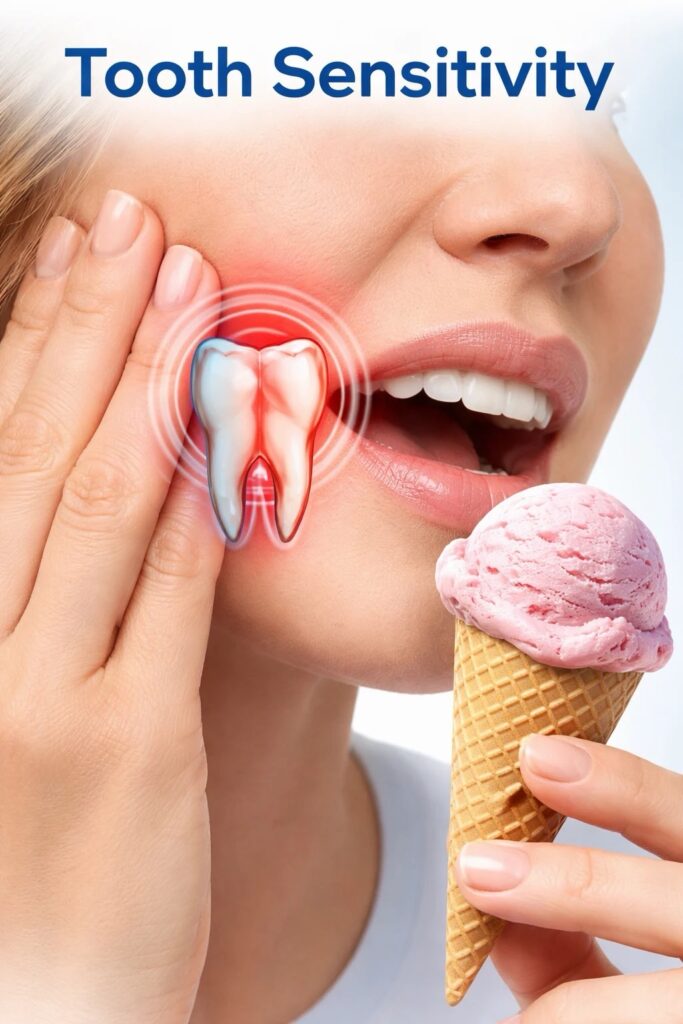
According to the World Health Organization, oral diseases affect billions of people globally, making dental problems extremely common.
Tooth sensitivity can turn simple daily activities into uncomfortable experiences. Whether it is a mild tingling sensation or a sharp shooting pain, understanding the causes of tooth pain, especially sensitivity, can help you take early action and avoid serious dental problems.
Tooth sensitivity is one of the most common causes of tooth pain, and understanding it in detail can help prevent long-term dental complications.
In this complete guide, you will learn what tooth sensitivity is, why it happens, the most common causes, effective treatments, and when you should visit a dentist.
What Exactly is Tooth Sensitivity?
Tooth sensitivity, also known as dentin hypersensitivity, occurs when the protective outer layer of your teeth (enamel) wears down or when your gums recede, exposing the inner layer called dentin.
Dentin contains thousands of microscopic tubules that connect directly to the nerve of the tooth. When exposed, these tubules allow external triggers such as hot, cold, sweet, or acidic foods to reach the nerves, causing pain.
The American Dental Association explains that exposed dentin allows stimuli to reach the nerves, leading to sensitivity.
This is why even a small sip of cold water can cause a sharp reaction.
Tooth sensitivity is not just a minor inconvenience—it is often one of the early causes of tooth pain and a warning sign that your teeth need attention.
Tooth Sensitivity vs Tooth Decay: What’s the Difference?
Many people confuse sensitivity with cavities, but they are different conditions.
- Tooth Sensitivity
Usually causes short, sharp pain triggered by temperature or sweets and disappears quickly. - Tooth Decay (Cavity)
Pain tends to be more persistent, may worsen over time, and often occurs while chewing or biting.
If your pain lingers or worsens, it may indicate deeper causes of tooth pain such as infection or decay.
Major Causes of Sensitive Teeth
Below are the most common causes of sensitivity, many of which are also major causes of tooth pain.
Dental experts recommend early diagnosis because untreated sensitivity can progress into more serious conditions affecting the tooth nerve.
1. Enamel Erosion and Aggressive Brushing
Brushing your teeth too hard or using a hard-bristled toothbrush can gradually wear down enamel. Over time, this exposes dentin and leads to sensitivity.
In addition, acidic foods and drinks such as citrus fruits, soft drinks, and vinegar weaken enamel and increase sensitivity.
Medical experts at Mayo Clinic note that acidic foods can erode enamel and increase tooth sensitivity.
2. Gum Disease and Receding Gums
When gums recede, the tooth roots become exposed. Unlike enamel, roots are not well protected, making them highly sensitive.
Gum recession can occur due to gum disease, poor oral hygiene, aging, or genetics.
👉 Learn more about maintaining healthy gums in our Ultimate Guide to Oral Hygiene for Healthy Teeth.
3. Teeth Grinding (Bruxism)
Grinding your teeth, especially during sleep, creates excessive pressure that wears down enamel. Over time, this exposes the dentin and increases sensitivity.
4. Tooth Decay and Structural Damage
Cavities, cracked teeth, or damaged fillings can expose deeper layers of the tooth. This is a common cause of localized sensitivity.
5. Dental Procedures and Whitening
Sensitivity is common after dental treatments such as fillings, crowns, or teeth whitening. This is usually temporary but should be monitored.
6. Medical and Lifestyle Factors
Certain health conditions like acid reflux (GERD) or frequent vomiting expose teeth to acid, which erodes enamel.
Dry mouth is another contributing factor, as saliva helps protect teeth from acid damage.
Tooth sensitivity is just one part of a broader set of dental problems. To understand all possible reasons, explore the full list of causes of tooth pain.
Surprising Causes of Tooth Sensitivity
Sometimes, sensitivity is caused by less obvious factors:
- Frequent consumption of cold beverages
- Using whitening toothpaste excessively
- Poor hydration leading to dry mouth
- Sudden dietary changes
These factors may not seem serious but can contribute to long-term causes of tooth pain.
Symptoms of Tooth Sensitivity
You may have sensitive teeth if you experience:
- Sharp pain when drinking hot or cold beverages
- Discomfort while eating sweets or acidic foods
- Pain during brushing or flossing
- Sudden sensitivity that comes and goes
Recognizing these symptoms early can help you identify underlying causes of tooth pain before they become severe.
At-Home Remedies and Prevention Tips
If your sensitivity is mild, you can manage it with simple lifestyle changes.
Use Desensitizing Toothpaste
Special toothpaste for sensitive teeth helps block nerve signals and reduce discomfort.
The National Health Service (NHS) recommends using desensitizing toothpaste regularly to manage sensitivity.
Improve Your Brushing Technique
Use a soft-bristled toothbrush and brush gently in circular motions.
Adjust Your Diet
Limit acidic foods and drinks. After consuming them, rinse your mouth with water.
Use Fluoride Products
Fluoride strengthens enamel and reduces sensitivity.
👉 Follow these daily oral hygiene tips for healthy teeth and gums to protect your teeth.
Stay Hydrated
Proper hydration helps maintain saliva levels and protect teeth naturally.
Professional Dental Treatments
Professional treatments are often required when sensitivity is linked to deeper causes of tooth pain such as structural damage or infection.
Fluoride Treatment
Dentists apply high-strength fluoride to strengthen enamel.
Dental Bonding
A protective layer is applied over exposed dentin.
Gum Grafting
Used in severe cases of gum recession.
Night Guards
Protect teeth from grinding damage.
Root Canal Treatment
Required in severe cases involving nerve damage.
Quick Summary: How to Reduce Tooth Sensitivity
- Use desensitizing toothpaste daily
- Avoid acidic foods and drinks
- Brush gently with a soft toothbrush
- Maintain good oral hygiene
- Visit a dentist if symptoms persist
When Should You See a Dentist?
You should consult a dentist if:
- Sensitivity lasts more than 1–2 weeks
- Pain becomes severe
- Pain is limited to one tooth
- Pain lingers after trigger
- You notice swelling or infection signs
The Centers for Disease Control and Prevention recommends early dental evaluation to prevent complications.
Persistent sensitivity may indicate deeper causes of tooth pain such as infection or nerve damage.
Tooth Sensitivity Treatment
If your sensitivity persists, professional evaluation is essential.
At Dr. Kaur’s True Pearls Dental Care, patients receive comprehensive care including:
- sensitivity treatment
- fluoride therapy
- gum care solutions
- cavity management
Early diagnosis can prevent sensitivity from progressing into more serious dental problems.
Can Tooth Sensitivity Go Away on Its Own?
In mild cases, sensitivity may improve with better oral hygiene and desensitizing toothpaste. However, if the underlying cause is enamel damage, gum recession, or decay, professional treatment is required.
Ignoring sensitivity can lead to more serious causes of tooth pain such as infection or nerve involvement.
Frequently Asked Questions
Why do my teeth hurt when I drink cold water?
This is usually due to exposed dentin or enamel erosion.
Can sensitive teeth be cured permanently?
Yes, in many cases sensitivity can be treated once the underlying cause is addressed.
Is tooth sensitivity serious?
Mild sensitivity is common, but persistent sensitivity may indicate deeper dental problems.
What are the common causes of tooth pain?
The most common causes of tooth pain include cavities, gum disease, cracked teeth, sensitivity, and infections.
Conclusion
Tooth sensitivity is a common dental issue, but it should not be ignored. It is often one of the early causes of tooth pain and a sign that your teeth need attention.
By understanding the causes, improving your oral hygiene habits, and making small lifestyle changes, you can protect your teeth and prevent discomfort.
If symptoms persist, seeking professional dental care is essential. Early treatment not only relieves pain but also helps preserve your long-term oral health.
About the Author
Dr. Gurinder Kaur is an experienced dental surgeon with over 20 years of clinical expertise in diagnosing and treating a wide range of dental conditions, including tooth pain, sensitivity, gum disease, and restorative procedures.
She leads Dr. Kaur’s True Pearls Dental Care, focusing on advanced dental treatments, patient comfort, and long-term oral health. Her approach combines clinical precision with patient education to ensure the best outcomes.