
Comprehensive Guide to Scaling and Root Planing
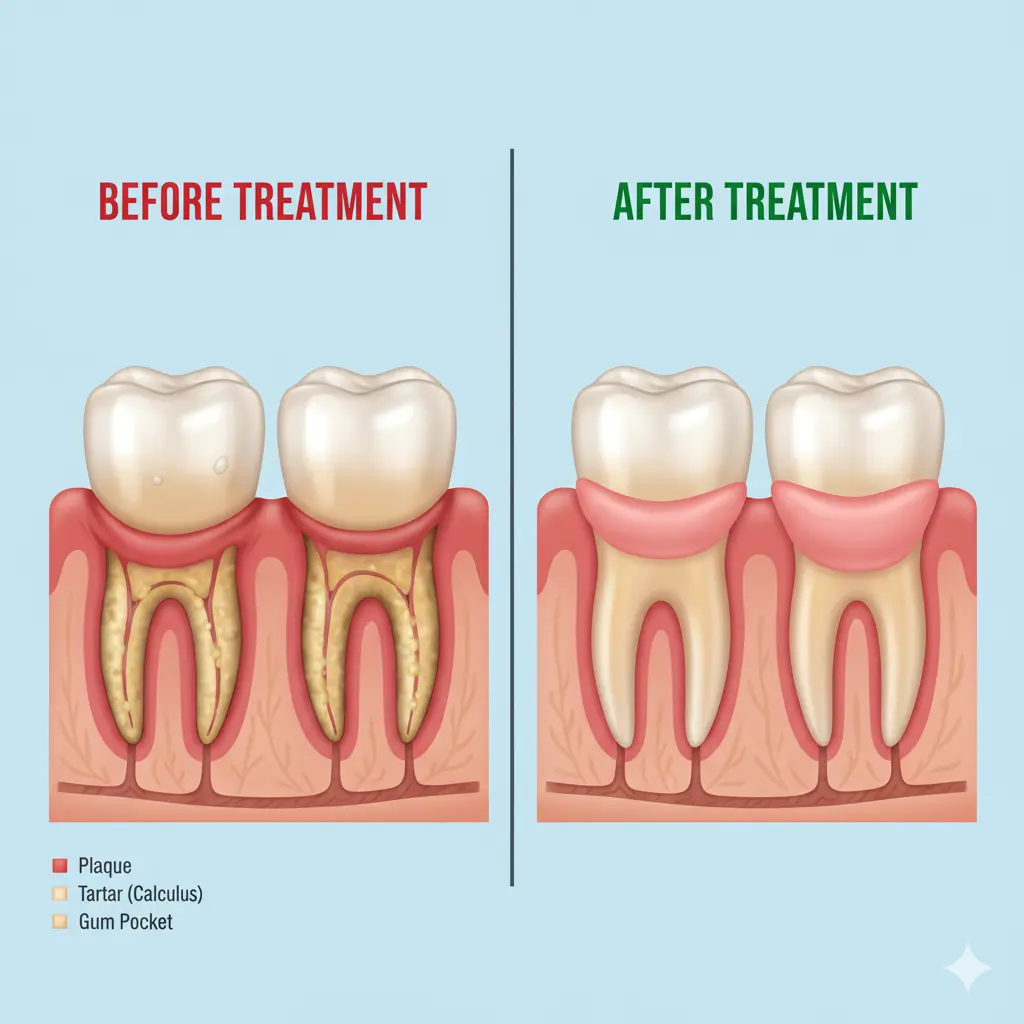
Teeth cleaning through scaling and root planing is one of the most effective treatments for gum disease. This professional deep cleaning procedure removes plaque, tartar, and harmful bacteria from both above and below the gumline. By eliminating infection and smoothing the tooth roots, the treatment allows the gums to heal and reattach to the teeth.
At our dental clinic in Ranchi, scaling and root planing is performed using modern ultrasonic dental technology to ensure safe and comfortable treatment. If you notice bleeding gums, persistent bad breath, gum swelling, or tartar buildup, professional teeth cleaning can help restore gum health and prevent advanced periodontal disease.
How Gum Disease Develops
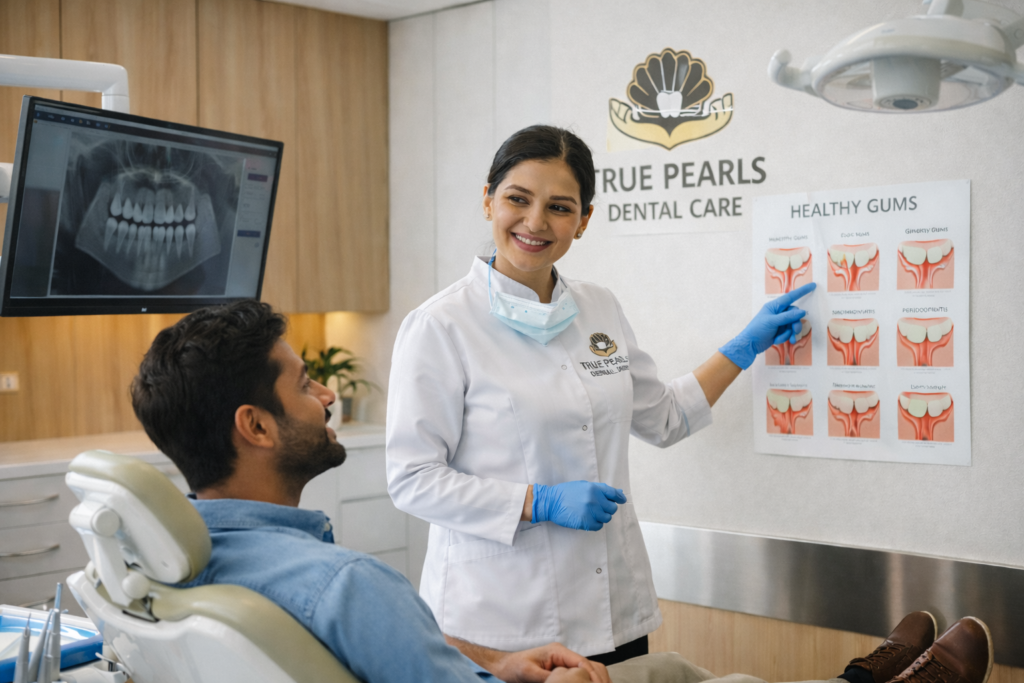
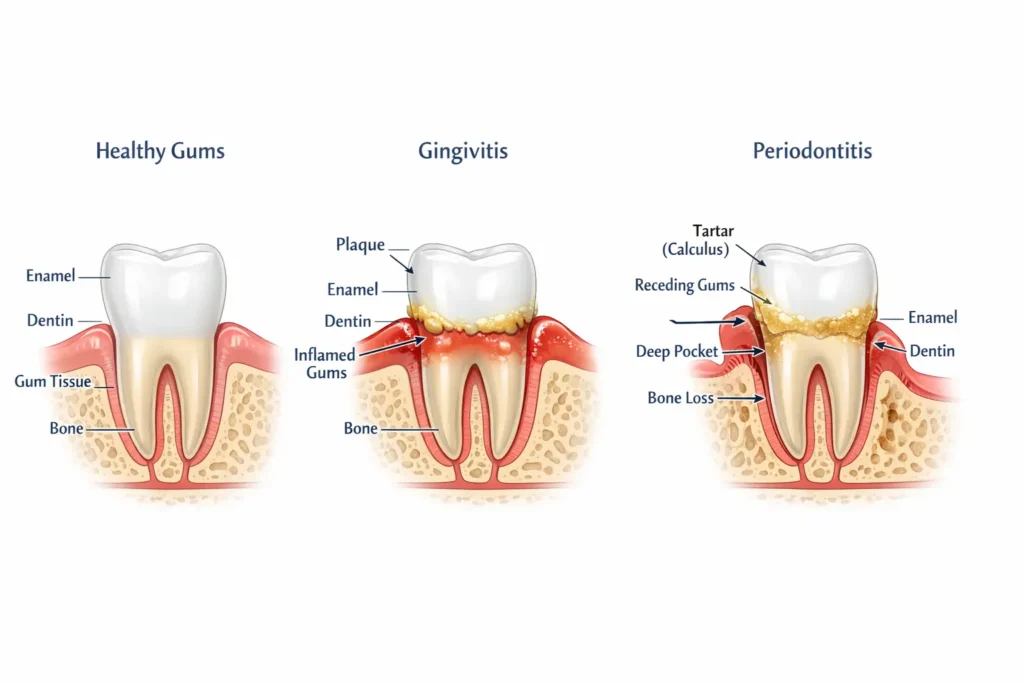
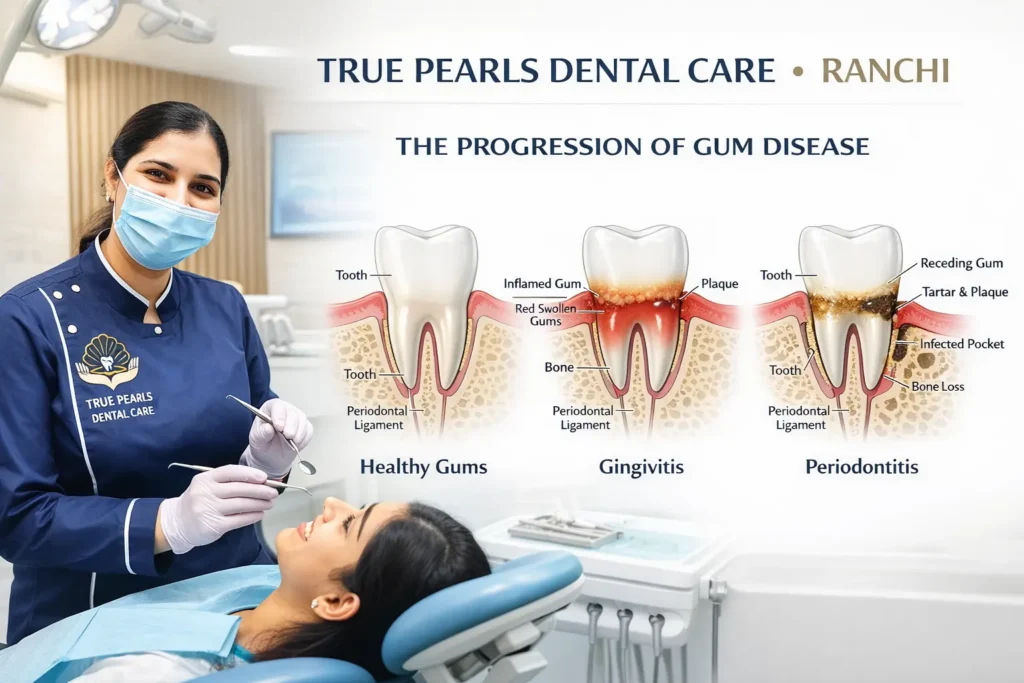
Gum disease begins with the buildup of dental plaque, a sticky bacterial film that forms on the teeth.
If plaque is not removed through proper brushing and flossing, it hardens into tartar (calculus) which cannot be removed at home.
This buildup irritates the gum tissue and causes gingivitis, the earliest stage of gum disease characterized by red, swollen, and bleeding gums.
If untreated, the gums begin to pull away from the teeth and form periodontal pockets where bacteria accumulate. Over time these bacteria damage the bone and tissues supporting the teeth, leading to periodontitis.
Signs You May Need Teeth Scaling Treatment
- Bleeding gums while brushing or flossing
- Red, swollen, or tender gums
- Persistent bad breath
- Gum recession (teeth appearing longer)
- Loose or shifting teeth
- Pain while chewing
- Tartar buildup near the gumline
If you notice these symptoms, visiting a dentist for professional teeth cleaning and gum disease evaluation is recommended.
What Is Scaling and Root Planing?
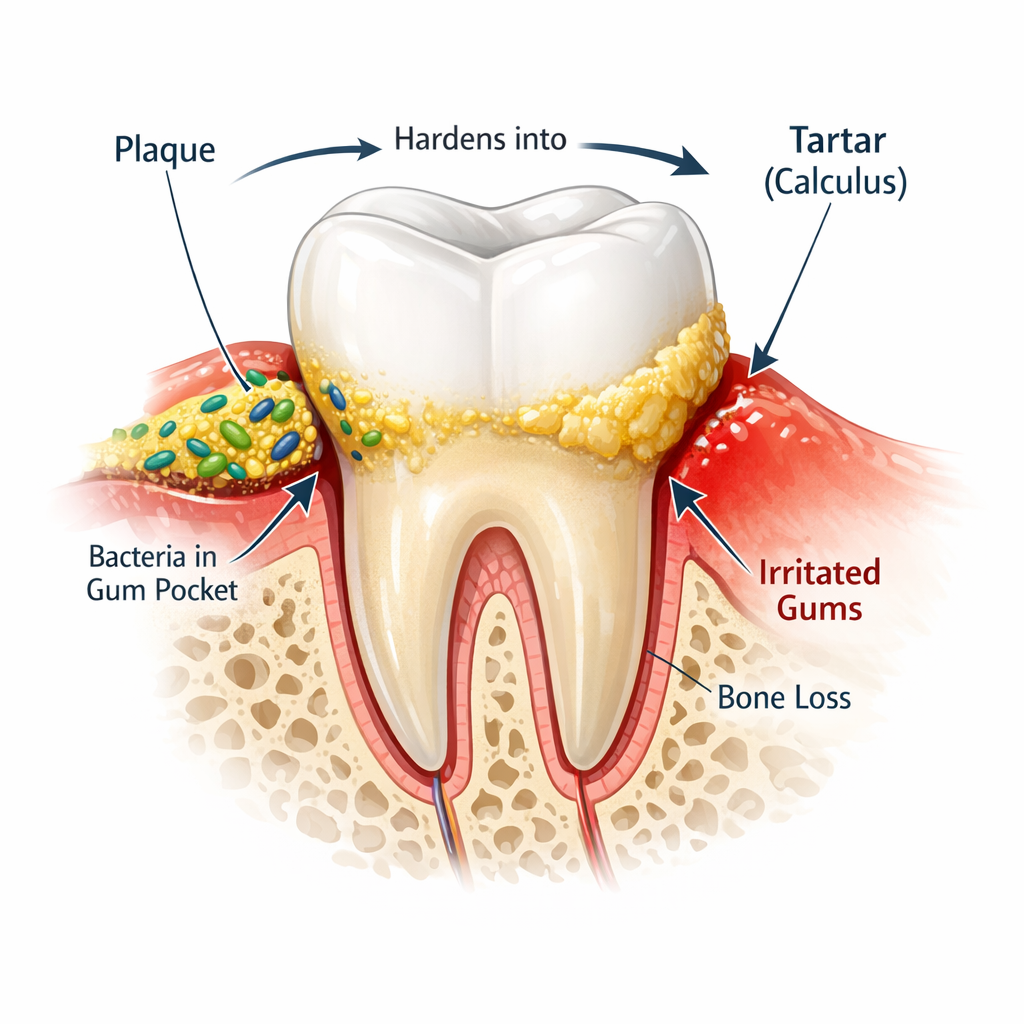
Scaling and root planing is a specialized deep cleaning treatment used to treat gum disease (periodontitis). Unlike routine teeth cleaning that focuses only on the visible surfaces of teeth, this procedure removes plaque, tartar, and bacteria from deep periodontal pockets below the gumline.
The treatment involves two important steps: removing hardened deposits from tooth surfaces and smoothing the roots of the teeth. This helps eliminate bacterial toxins and creates a healthy environment for the gums to heal and reattach to the teeth.
Why You Might Need Scaling and Root Planing
Gum disease often develops silently, and early symptoms may be mild or easily overlooked. Recognizing the warning signs early allows timely treatment and helps prevent damage to the gums and supporting bone.
Signs that you may require professional teeth cleaning or scaling and root planing include:
- Bleeding gums during brushing or flossing
- Red, swollen, or tender gums
- Persistent bad breath or unpleasant taste in the mouth
- Gum recession causing teeth to appear longer
- Tooth sensitivity near the gumline
- Loose teeth or shifting bite alignment
- Visible tartar buildup along the gumline
- Deep periodontal pockets detected during a dental examination
If left untreated, gum disease can gradually damage the supporting bone and connective tissues around the teeth. Professional scaling and root planing helps remove plaque, tartar, and bacteria from deep periodontal pockets and prevents the progression of periodontal disease.
Teeth Cleaning vs Scaling and Root Planing
Many people believe teeth cleaning and scaling are the same procedure, but they are used for different dental conditions.
Routine Teeth Cleaning (Prophylaxis)
Routine dental cleaning removes plaque and tartar from the visible surfaces of teeth above the gumline and is recommended for patients with healthy gums.
Scaling and Root Planing
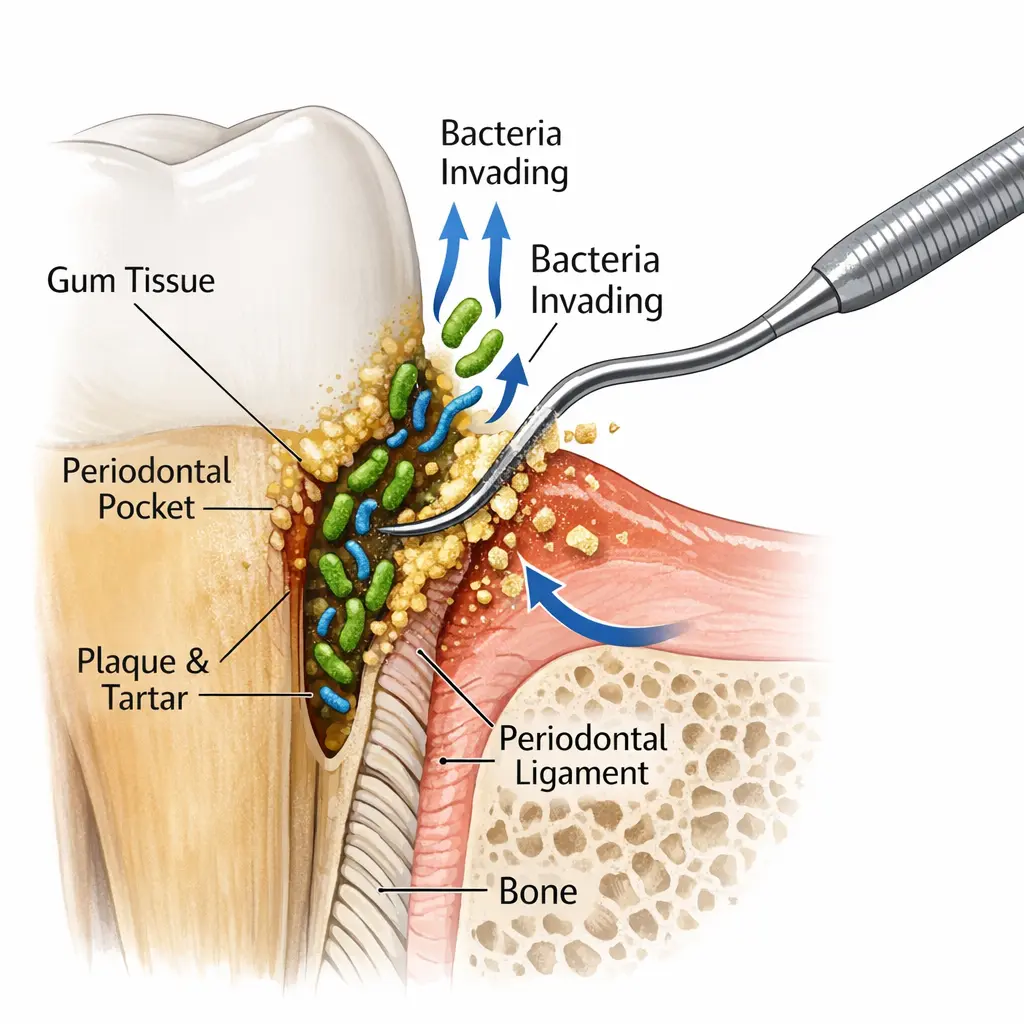
Scaling and root planing is a deeper cleaning procedure recommended when gum disease is present. It removes plaque and tartar from deep periodontal pockets and smooths the root surfaces of teeth so gums can heal and reattach.
The Scaling and Root Planing Procedure: Step by Step
Understanding the scaling and root planing procedure helps reduce patient anxiety and improves cooperation during treatment. This deep cleaning treatment is carefully planned to ensure effective removal of plaque, tartar, and bacterial infection from the gums.
- Dental Examination and X-rays: The dentist first examines the gums and measures periodontal pocket depths around the teeth. Dental X-rays may be taken to evaluate bone support and identify areas affected by gum disease.
- Comfort and Numbing: Local anesthesia or topical numbing gel is used to ensure patient comfort during the procedure. This helps make scaling and root planing a comfortable experience.
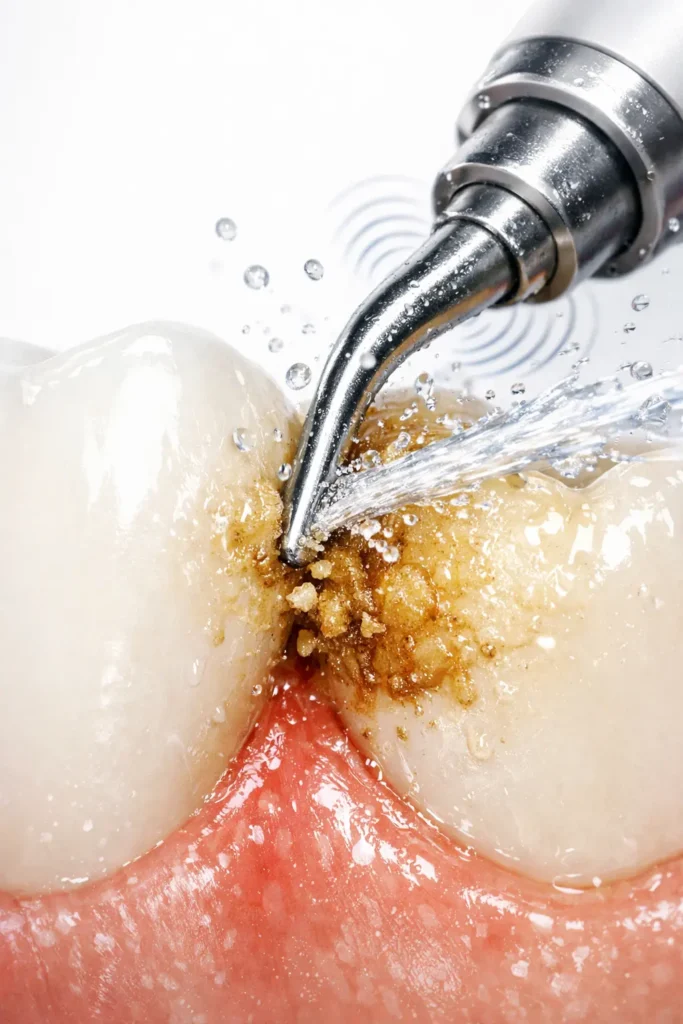
- Dental Scaling: The dentist removes plaque and hardened tartar deposits from above and below the gumline using ultrasonic scalers and specialized dental instruments. This step eliminates harmful bacteria from deep periodontal pockets.
- Root Planing: After scaling, the root surfaces of the teeth are carefully smoothed. Root planing removes bacterial toxins and rough areas where plaque accumulates, allowing the gums to heal and reattach to the teeth.
- Antimicrobial Rinse or Local Medication: In some cases, antimicrobial solutions or localized antibiotics may be applied to reduce bacteria and support faster healing.
- Post-Treatment Care and Follow-up: Patients receive instructions on oral hygiene, brushing, and flossing techniques. Follow-up appointments may be scheduled to monitor healing and evaluate gum health.
Scaling and root planing is commonly performed in quadrants (one or two sections of the mouth per visit) to ensure thorough cleaning while maintaining patient comfort.
How Long Does Scaling and Root Planing Take?
The duration of scaling and root planing depends on the severity of gum disease and the amount of tartar buildup.
In most cases the procedure takes about 45–60 minutes per visit. Some patients may require multiple sessions if gum disease is more advanced.
Technology Used for Teeth Scaling Treatment
- Ultrasonic scalers for removing hardened tartar deposits
- Manual dental curettes for detailed root cleaning
- Antimicrobial irrigation to disinfect periodontal pockets
- Dental laser therapy in certain cases to promote healing
Is Teeth Scaling Painful?
Scaling and root planing is generally a comfortable procedure. Dentists usually administer local anesthesia to numb the gums before treatment.
Most patients experience minimal discomfort. Mild gum tenderness or tooth sensitivity may occur for a few days after treatment.
Benefits of Scaling and Root Planing
- Reduces bleeding, swelling, and tenderness of gums
- Decreases bacterial accumulation and inflammation
- Promotes gum reattachment and reduces pocket depth
- Improves breath and oral comfort
- Protects bone integrity and reduces risk of tooth loss
- Supports overall systemic health by reducing oral inflammation
Aftercare: What to Expect and How to Maintain Results
Mild soreness or sensitivity is normal for a few days following treatment. Patients should follow these professional aftercare guidelines:
Immediate Care (First 24–72 hours):
- Take dentist-recommended analgesics as needed
- Rinse gently with warm salt water (½ tsp salt in 1 cup warm water) 2–3 times daily
- Avoid very hot, cold, spicy, or hard foods for the first day
- Brush gently with a soft-bristle toothbrush and carefully floss
- Follow instructions if localized antibiotics were applied
Long-Term Maintenance:
- Brush twice daily with fluoride toothpaste (electric toothbrush preferred)
- Floss or use interdental brushes daily
- Use antimicrobial mouthrinse if advised by the dentist
- Schedule periodontal maintenance visits every 3–4 months
- Maintain a balanced diet, stay hydrated, and avoid tobacco products
Contact your dentist if you experience: persistent or increasing pain, swelling, continuous bleeding, fever, or signs of infection.

Teeth Cleaning and Scaling Cost in Ranchi
The cost of professional teeth cleaning in Ranchi depends on the severity of tartar buildup and gum disease.
Scaling and root planing treatment typically ranges between ₹1500 to ₹5000 depending on the complexity of treatment.
Frequently Asked Questions About Scaling and Root Planing
Does scaling and root planing hurt?
Scaling and root planing is usually performed under local anesthesia, so patients remain comfortable during the procedure. After treatment, mild gum tenderness or sensitivity may occur for a few days, which usually improves quickly as the gums heal.
How long does scaling and root planing take?
The treatment duration depends on the severity of gum disease and the amount of tartar buildup. Most patients complete scaling and root planing in one or two visits, with each appointment lasting about 45 to 90 minutes.
Is scaling and root planing the same as regular teeth cleaning?
No. Routine teeth cleaning removes plaque and tartar from the visible surfaces of the teeth above the gumline. Scaling and root planing is a deeper cleaning procedure that removes bacteria and tartar from below the gumline and smooths the tooth roots to treat gum disease.
How often should teeth cleaning be done?
For most people, dentists recommend professional teeth cleaning every six months. Patients with gum disease may require more frequent periodontal maintenance visits every three to four months.
What happens if gum disease is left untreated?
Untreated gum disease can damage the supporting bone and tissues around the teeth. Over time this may lead to loose teeth or tooth loss. Early treatment with scaling and root planing helps prevent these complications and protects long-term oral health.
Prevention: Keep Gum Disease at Bay
- Attend professional cleanings and exams regularly
- Replace toothbrush or brush head every 3 months
- Clean between teeth daily with floss or interdental brushes
- Manage dry mouth, diabetes, and other systemic factors
- Maintain a nutrient-rich diet and limit sugary foods
Why Choose Our Clinic for Teeth Cleaning in Ranchi?
- Advanced ultrasonic scaling technology
- Comfortable and gentle treatment
- Personalized periodontal care
- Strict sterilization protocols
- Experienced dental professionals
Patients from Doranda, Harmu, Lalpur, Bariatu, Morabadi, and Kanke Road frequently visit our dental clinic for professional teeth cleaning and gum disease treatment in Ranchi.
Ready to Restore Your Gum Health?
Scaling and root planing is one of the most effective non-surgical treatments for gum disease. By removing plaque, tartar, and bacteria from deep periodontal pockets, this procedure helps restore healthy gums and protect teeth from long-term damage.
Scaling and root planing is a clinically proven procedure to treat gum disease and protect your oral health. Early intervention improves long-term outcomes.
Visit Dr. Kaur’s True Pearls Dental Care, Ranchi
New patients welcome | Same-day appointments available.